About Our Company
About Centereach Electrician Masters
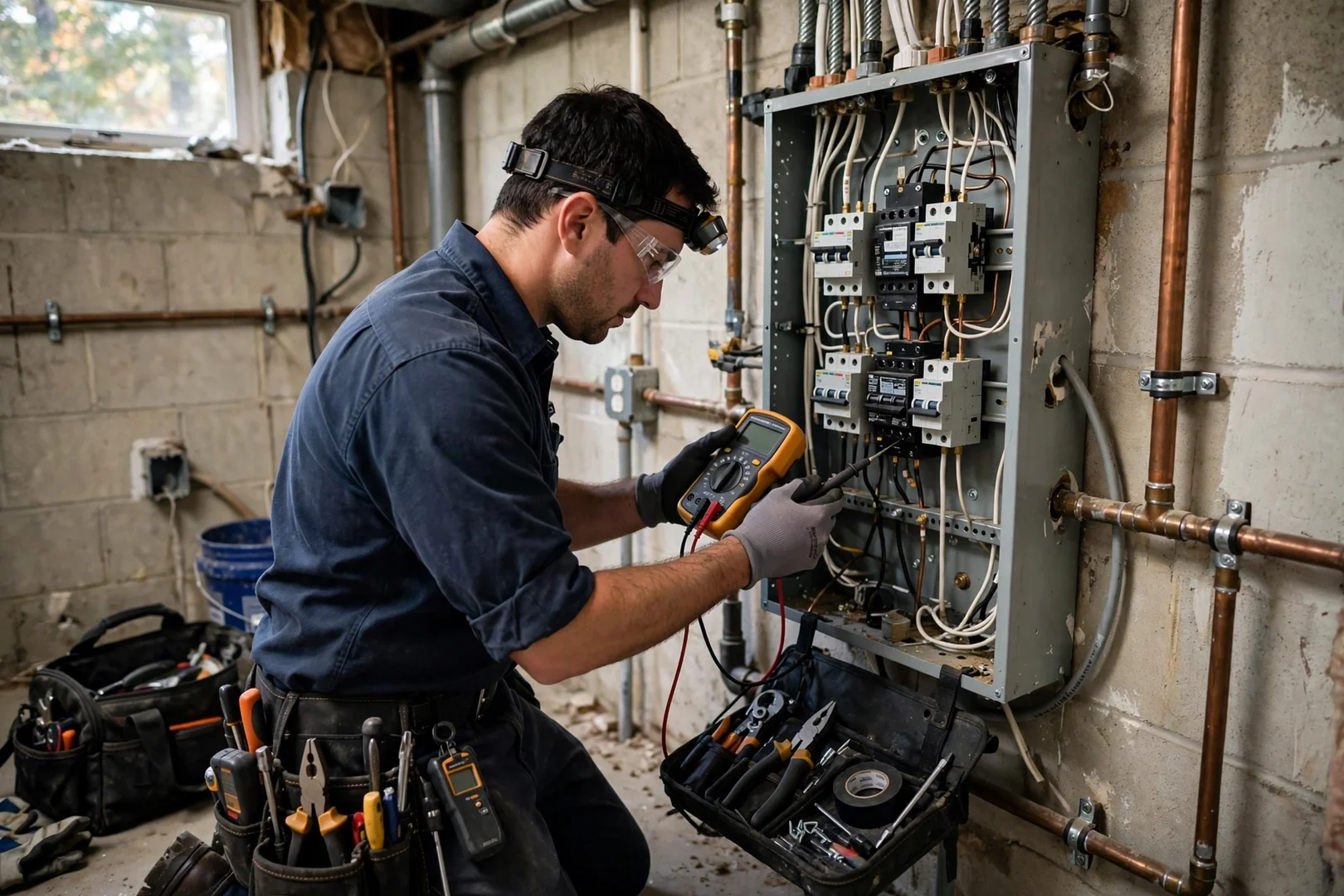
Centereach Electrician Masters is built around accurate diagnosis and code-correct installation, not guesswork. Our licensed electricians use circuit tracers, insulation testers, and thermal scanning to evaluate panels, branch circuits, and grounding before any work begins. Heading through 2026, the team continues servicing Centereach homes with documented load calculations, written estimates, and a post-job walkthrough on every call. Read on for how we work and what shaped our methods.
// Our Background //
Background of Centereach Electrician Masters
What Experience Do We Bring to Centereach Properties?
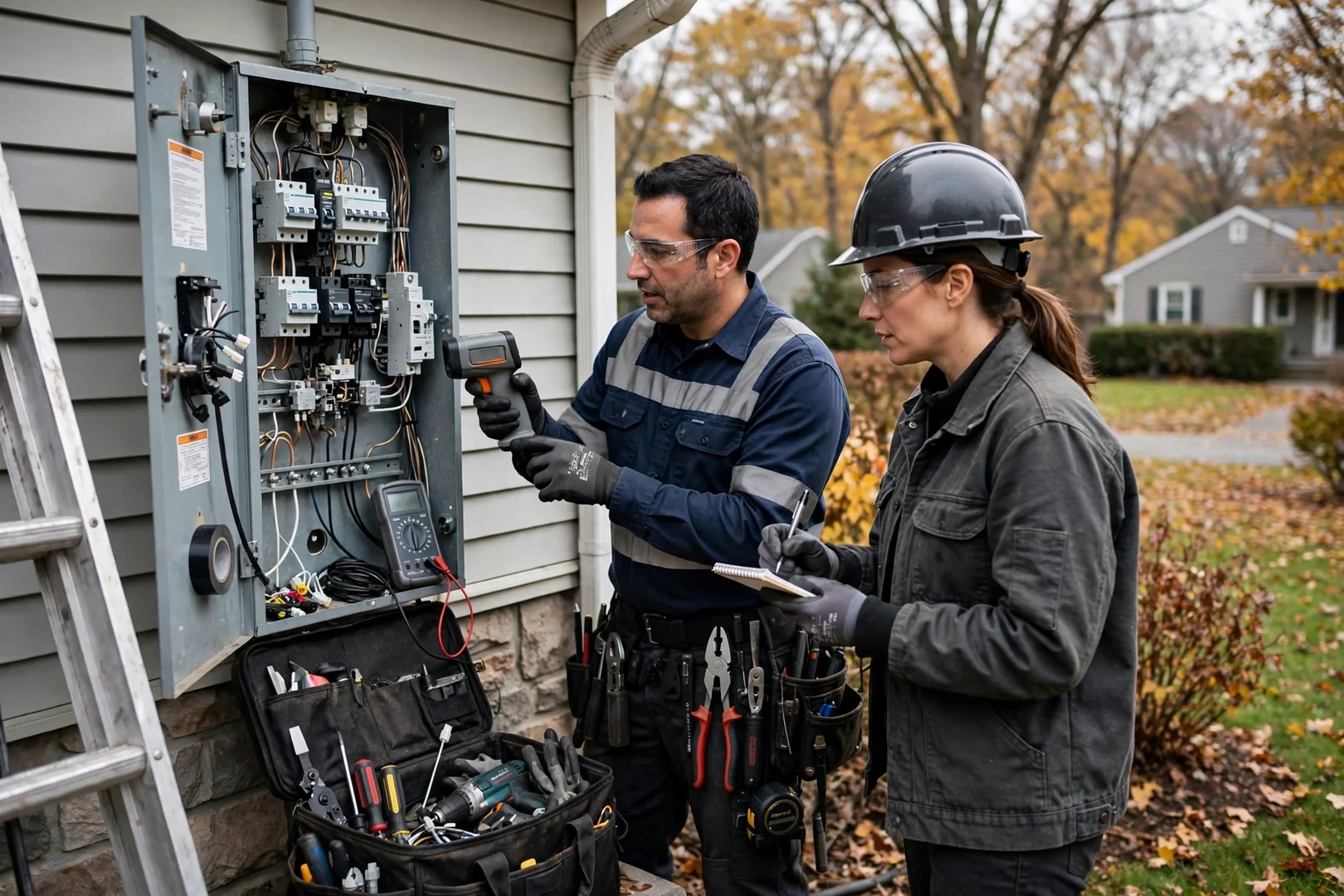
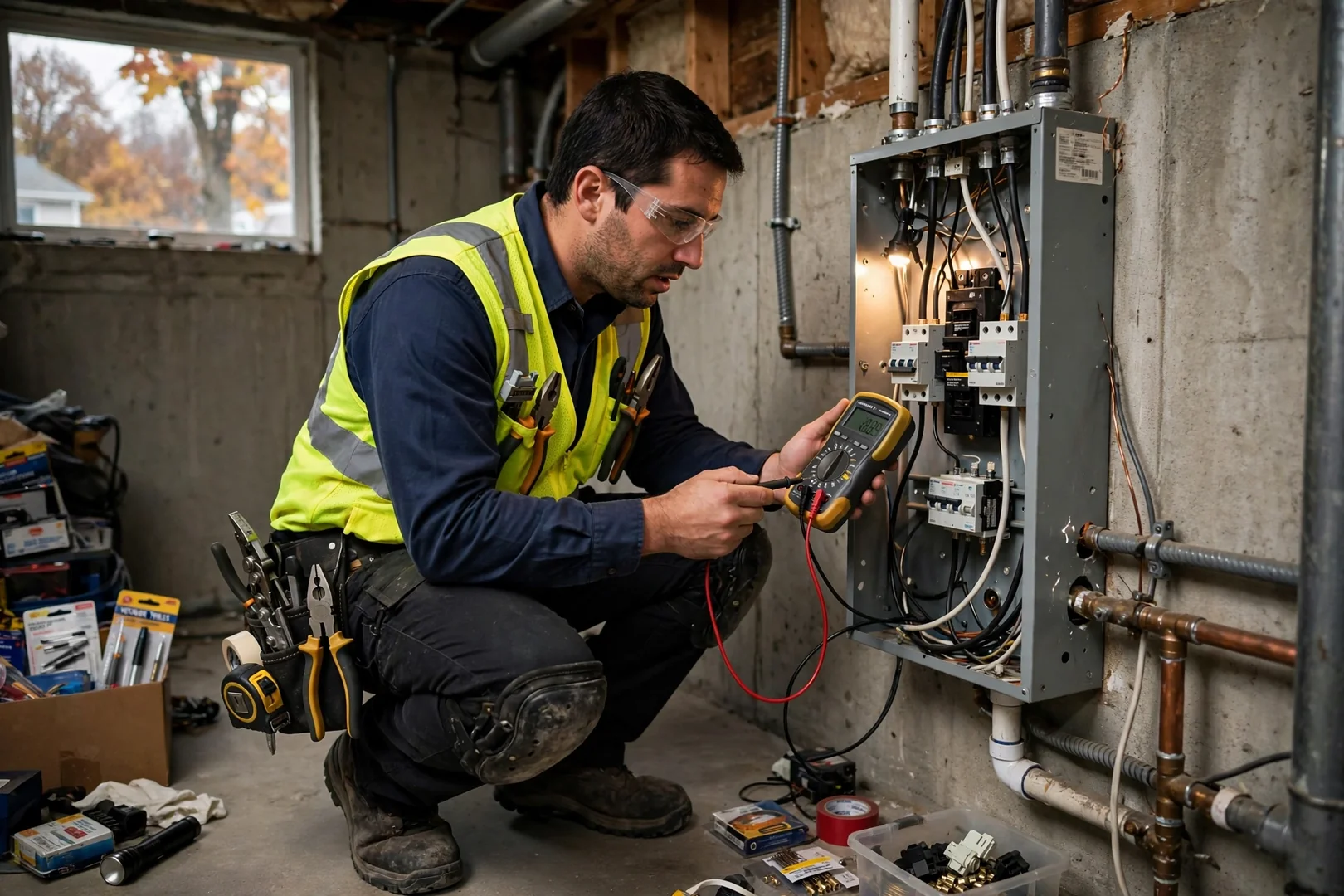
Our electricians have worked across the full range of Centereach residential systems, from mid-century fuse-panel conversions to new 240-volt EV charger circuits and standby generator interlocks. That exposure covers overloaded subpanels, corroded service entrance cable, backfed neutrals, nuisance breaker tripping, and failed GFCI devices in damp basements and exterior receptacles. Coastal humidity and winter load spikes on Long Island shorten the life of terminations and weatherheads, so we inspect for oxidation and heat damage on every service call. Technique keeps changing with the code cycle. Arc-fault requirements, tamper-resistant receptacles, and surge protection at the panel are all part of standard 2026 work.
Property types vary widely across Centereach, and that shapes the approach. Split-levels and ranches with finished basements need careful fishing routes and minimal drywall disruption; larger renovated homes usually need load calculations before adding circuits for heat pumps or chargers. Diagnostics come before quotes, using thermal imaging and insulation resistance readings to separate a failing breaker from a failing conductor. Findings go in writing. Homeowners get the test results, the repair scope, and the completion walkthrough documented.
What Standards Guide Our Electrical Work?
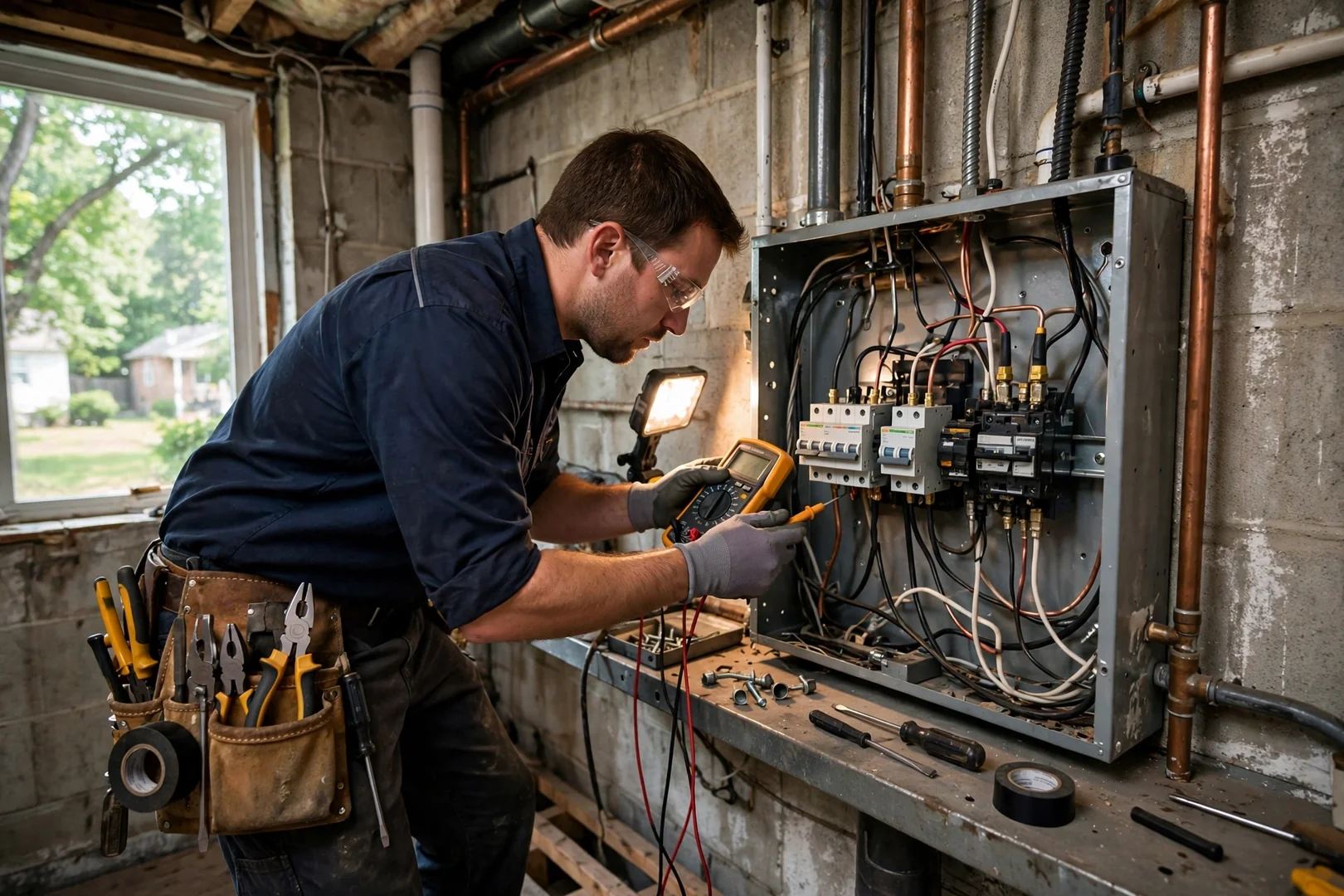
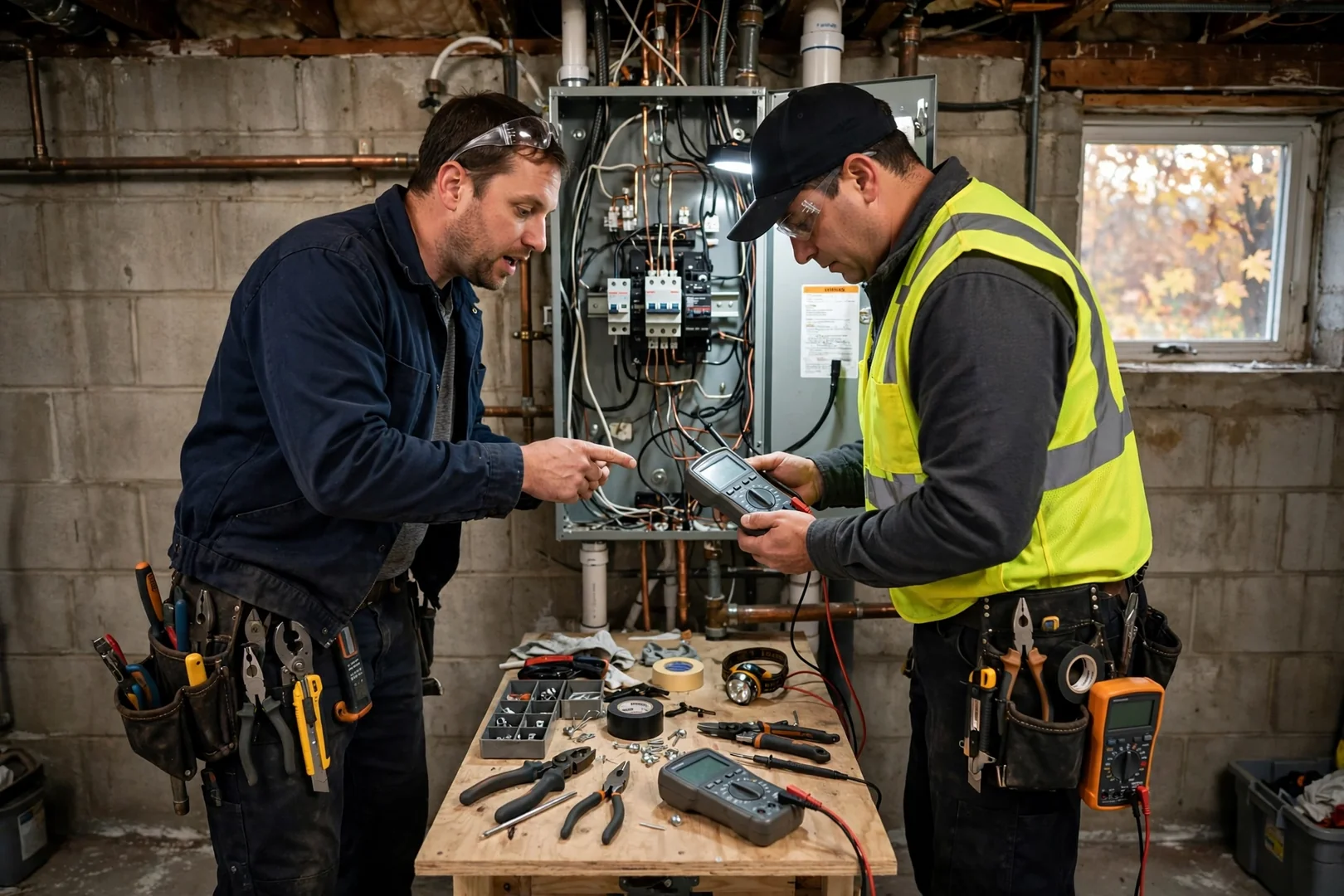
Every job starts with de-energizing the circuit, verifying dead with a meter, and applying lockout/tagout before any panel cover comes off. Technicians wear arc-rated PPE and insulated gloves rated for the voltage they are working on. Torque values on breaker lugs and neutral bars are set with a calibrated torque screwdriver, not by feel. Test instruments are inspected before each use and pulled from the truck if a lead or probe shows wear. Short list, no exceptions.
Wiring methods, conductor sizing, and box fill are matched to the code edition enforced for Centereach permits, and we track the 2026 update cycle so AFCI, GFCI, and grounding requirements are applied correctly the first time. Homeowners get a written estimate before work begins, load calculations and circuit labeling documented at completion, and a walkthrough covering what was replaced and why. Removed copper, old breakers, and packaging leave with the crew for recycling or disposal. Industry-standard safety protocols apply to a single outlet swap the same way they apply to a service upgrade.
// Tools and Local Knowledge //
How Are We Equipped for Centereach Properties?
How We Work
How Do We Approach Every Electrical Job?
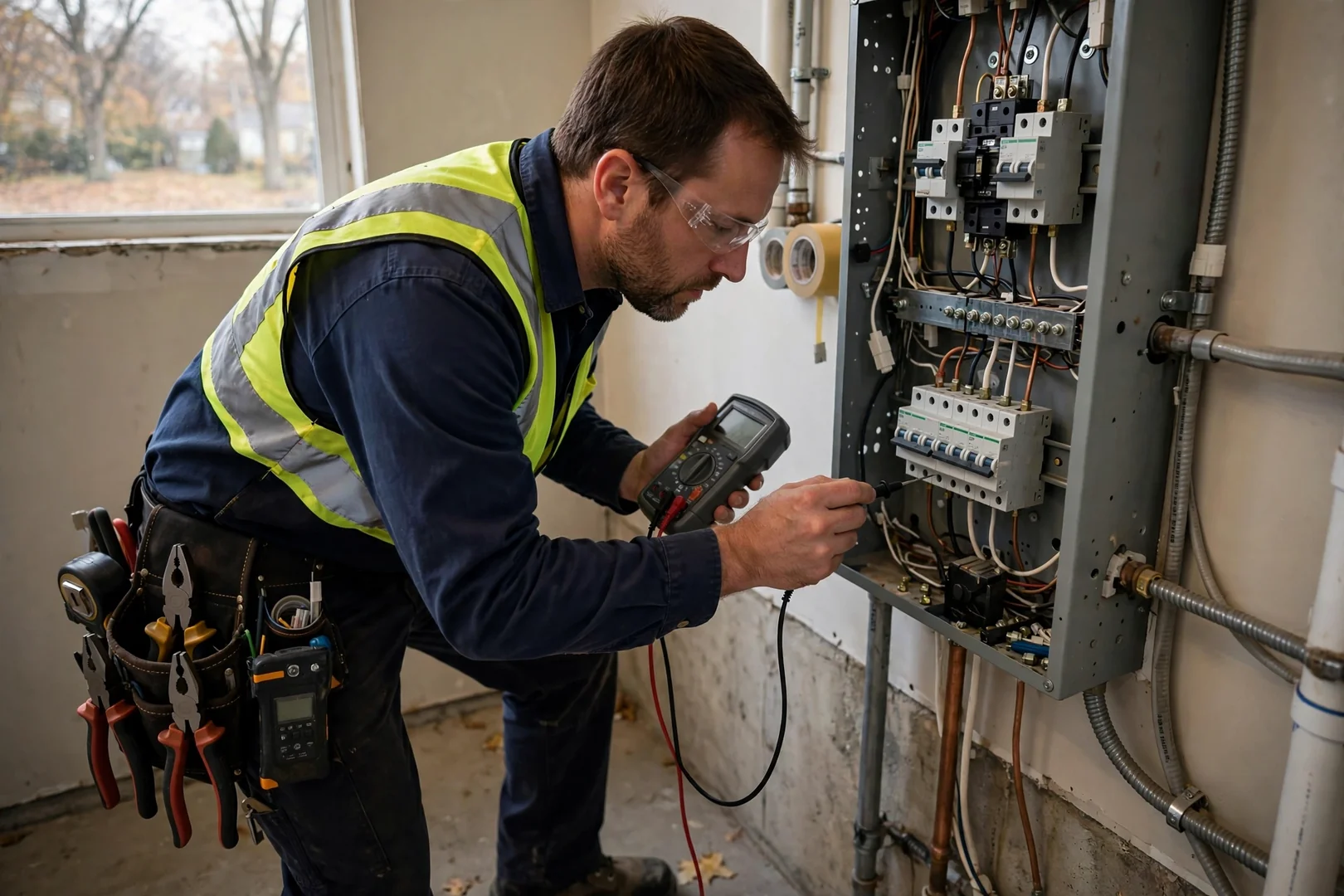
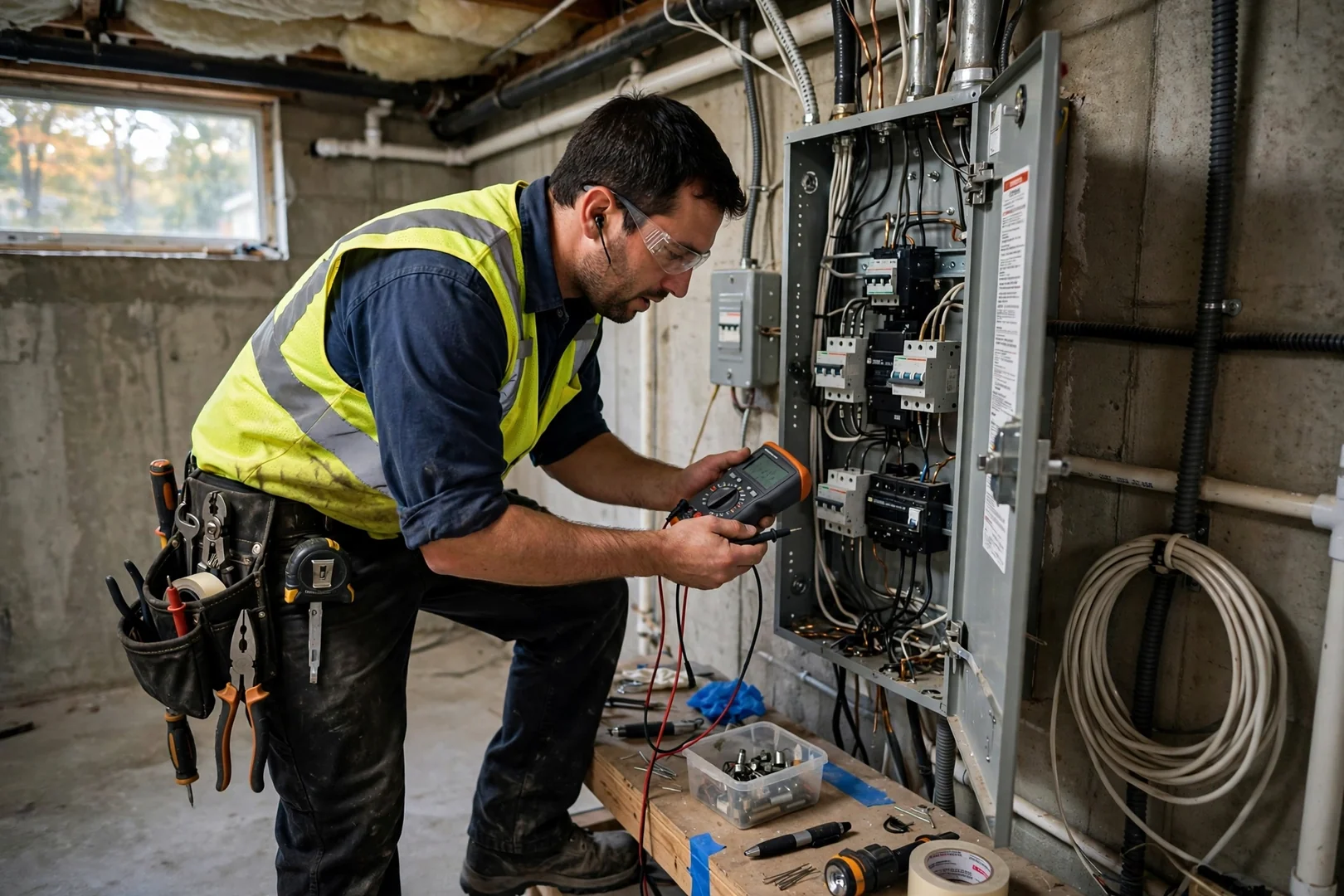
We start with diagnosis, not replacement: technicians map the affected circuits, take voltage and amp readings under load, and identify the actual fault before quoting parts. Scope decisions follow the readings. If a panel shows heat damage on a bus stab, we explain why a breaker swap will not hold and what a panel repair or upgrade involves, including permit and inspection steps in Centereach. Homeowners receive a written estimate with line items, and any change in scope is discussed before the work continues. Drop cloths go down near panels and fixtures, drill dust gets vacuumed, and circuits are labeled at the directory when we finish. Closing walkthrough covers test results, breaker positions, and what to watch for. Through 2026 we keep photo documentation of concealed junctions and grounding connections so the next service call starts with facts instead of guesswork.
Call Us On: (631) 529-1048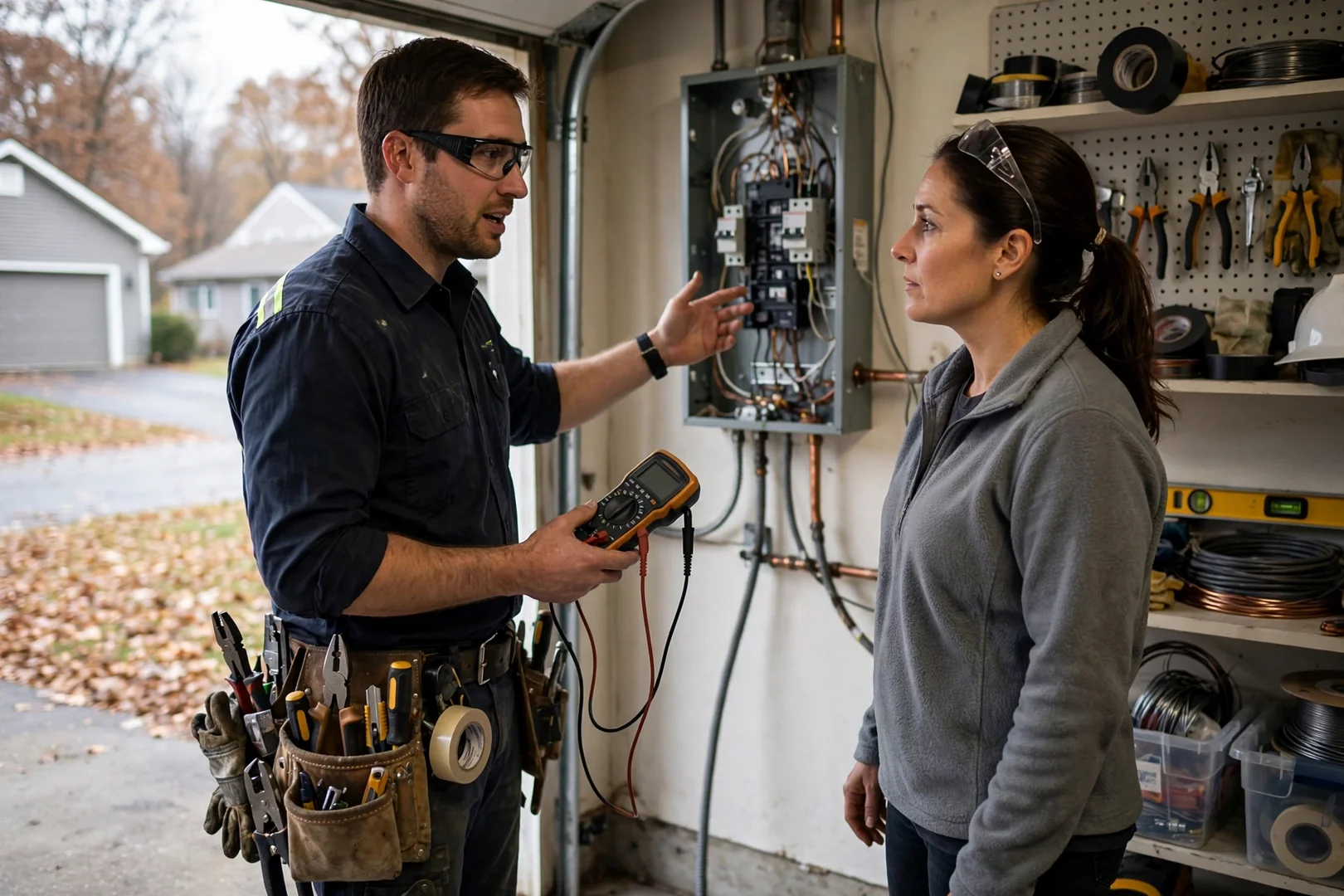

What Can Centereach Customers Expect From Us?
Every job starts with a written estimate that lists labor, materials, and the scope of work before a single circuit is opened. Our licensed electricians arrive within the scheduled window, use drop cloths and shoe covers indoors, and verify conditions with insulation resistance testers, clamp meters, and thermal scanning rather than guesswork. Pricing stays fixed to that written scope; if a panel bus, neutral bar, or branch conductor turns out to be damaged, we photograph it and get approval before proceeding. Documentation matters. Photos of terminations, torque values, and load calculations go into your file, and each visit closes with a walkthrough where we test outlets, breakers, and GFCI trip response with you present. Through 2026 we continue following NEC standards and Suffolk County permit requirements on Centereach homes, then follow up after energizing to confirm everything holds under normal load.
Request a Written EstimateElectrician Service Across Centereach and Nearby Areas
Coverage extends across all of Centereach, including North Centereach, South Centereach, and the neighborhoods along the Middle Country corridor, plus adjacent Suffolk County communities. Crews handle residential wiring, panel upgrades, and EV charger circuits as well as commercial lighting, subpanels, and code correction work. Service calls are routed by zone to keep drive time short.
Knowing the local property stock changes how a job is planned. Many Centereach houses were built with aluminum branch wiring, 100-amp service, or ungrounded two-prong receptacles, so our electricians test service capacity and load before adding generator transfer switches or Level 2 chargers. Coastal humidity and winter storm loads also affect corrosion at meter pans and outdoor connections, which we inspect during every 2026 evaluation.